What Are Carpentry Services?
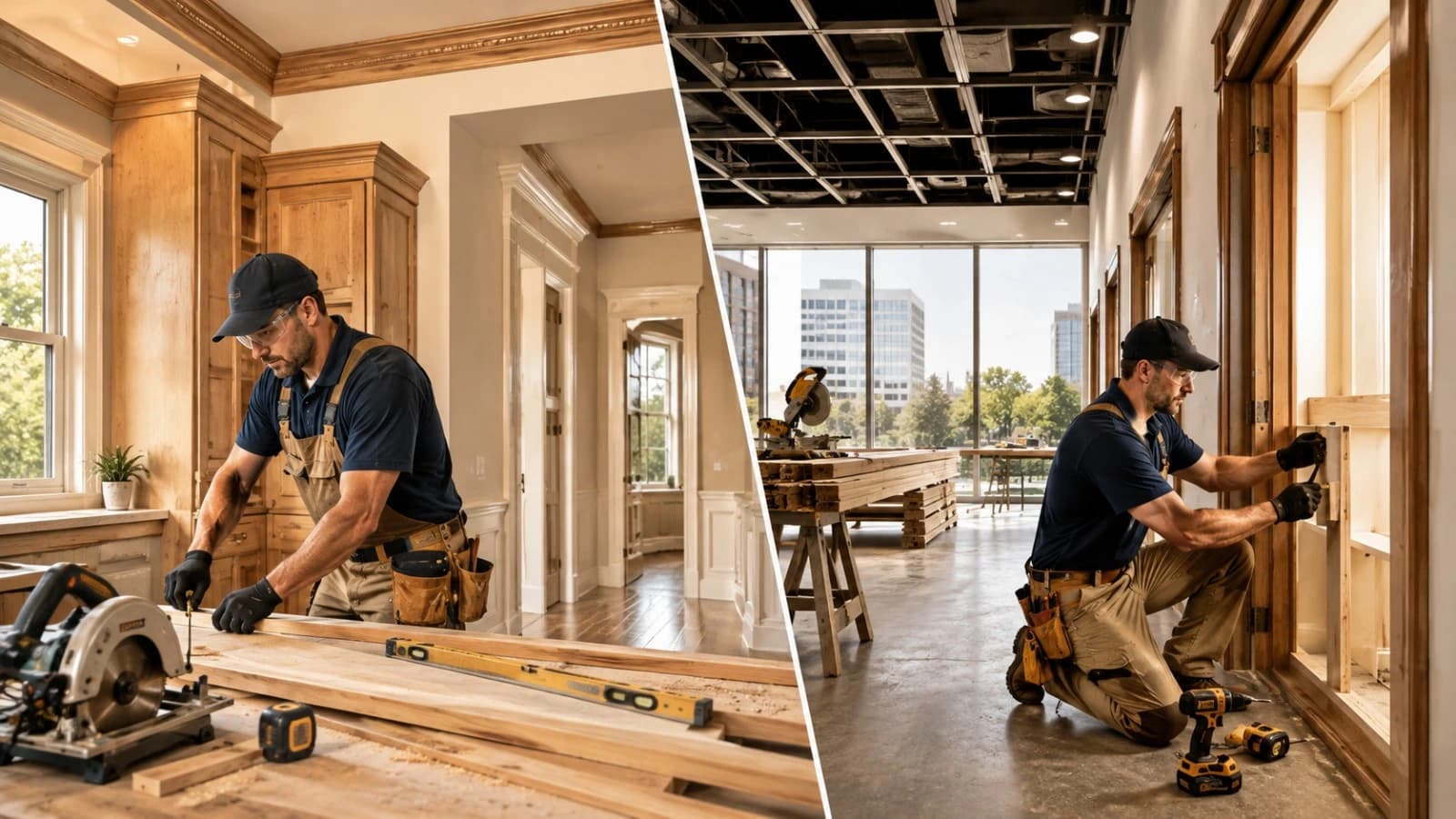
Carpentry services involve the construction, installation, repair, replacement, and finishing of wood and wood-based components used in residential and commercial buildings.
A carpenter may work on structural elements, interior finishes, exterior features, or custom woodwork. Depending on the project, carpentry can be part of a larger remodeling or construction job.
Common carpentry services include:
- Wood framing
- Door installation and repair
- Window trim
- Baseboards and crown molding
- Interior trim
- Deck construction and repairs
- Porch repairs
- Stair installation and repairs
- Cabinet installation
- Custom woodwork
- Wall and ceiling framing
- Wood siding repairs
- Exterior carpentry
- Commercial carpentry
- General wood repairs
A professional carpenter can help determine the best approach based on the property's condition, design, materials, and intended use.
Residential Carpentry Services in Essex County, NJ
Residential carpentry focuses on houses, townhomes, apartments, and other residential properties. Homeowners often hire carpenters when completing renovations, repairing damaged wood, improving interior finishes, or adding new features.
For example, a homeowner in Montclair may need replacement trim in an older home, while a homeowner in Livingston may want custom built-ins as part of a remodeling project.
Interior Carpentry
Interior carpentry can dramatically improve the appearance and functionality of a home.
Typical interior projects include:
- Installing baseboards
- Replacing damaged trim
- Crown molding installation
- Door casing installation
- Interior doors
- Stair components
- Wall framing
- Custom shelving
- Built-in storage
- Cabinet-related carpentry
- Decorative wood features
Small details such as properly installed trim can make a room look more complete. Poorly measured or uneven trim, on the other hand, can be noticeable even after a major renovation.
Exterior Residential Carpentry
Exterior carpentry is exposed to weather, moisture, temperature changes, and sunlight, making proper materials and installation especially important.
Common exterior carpentry projects include:
- Deck repairs
- Porch repairs
- Wood siding repairs
- Fascia and trim
- Exterior door frames
- Pergolas
- Wood steps
- Railings
- Outdoor structures
For exterior projects, homeowners should ask about the type of wood or composite material being used and how the finished work will be protected from moisture and weather.
Commercial Carpentry Services in Essex County
Commercial carpentry projects can be more complex because they may involve larger spaces, multiple trades, business schedules, safety requirements, and specific project deadlines.
Commercial carpenters may work on:
- Retail stores
- Office buildings
- Restaurants
- Apartment buildings
- Warehouses
- Property management projects
- Professional offices
- Commercial renovations
- Tenant improvements
- Maintenance and repair projects
A commercial property owner may need carpentry work completed while the building remains partially operational. In such cases, communication and scheduling become especially important.
Common Carpentry Projects for Businesses
Commercial carpentry does not always mean major construction. Many businesses need smaller repairs and improvements throughout the year.
Examples include replacing damaged doors, repairing wood trim, modifying office spaces, installing partitions, repairing stairs, or upgrading reception areas.
For businesses, these improvements can have practical benefits. A properly maintained commercial property can create a better environment for employees and customers while helping protect the building from further deterioration.
Why Local Experience Matters in Essex County
Hiring a carpenter who understands the local area can be beneficial. Essex County contains a mixture of historic properties, older residential buildings, newer construction, and commercial structures.
Older buildings can present different challenges from modern construction. Wood may have deteriorated over time, previous repairs may have used different materials, or existing structures may not be perfectly square or level.
A carpenter with experience working on different types of properties can identify these challenges before beginning the work.
Local experience can also help when coordinating carpentry with other trades, such as roofing, siding, painting, electrical work, plumbing, or general remodeling.
How to Choose the Right Carpenter
Choosing a carpenter should involve more than comparing prices. The lowest estimate is not automatically the best option.
Start by identifying your project clearly. Then look for a contractor or carpenter with experience handling similar work.
Consider the following:
Experience
Ask how long the carpenter or company has been performing the type of work you need.
A carpenter who regularly handles residential trim installation may not be the right choice for a large structural framing project. Likewise, a carpenter experienced in commercial renovations may have a different skill set from someone specializing in custom furniture.
Portfolio and Previous Work
Ask to see examples of completed projects when possible.
A portfolio can help you evaluate:
- Quality of workmanship
- Attention to detail
- Types of projects completed
- Materials used
- Finishing quality
- Ability to handle different property styles
Look for work that is similar to your own project rather than simply choosing someone based on attractive photographs.
References and Reviews
Customer reviews can provide useful information about communication, punctuality, workmanship, and professionalism.
If references are available, ask previous customers about their overall experience. Find out whether the project was completed as expected and whether the contractor communicated clearly throughout the process.
Insurance and Licensing
Before work begins, ask what insurance coverage the contractor carries and whether any required licenses or permits apply to your particular project.
Requirements can vary depending on the type and location of the work. A professional contractor should be able to explain what applies to the project.
Questions to Ask Before Hiring a Carpenter
A few questions can help you avoid misunderstandings later.
Ask:
- Have you completed projects similar to mine?
- What materials do you recommend?
- Who will perform the actual work?
- What is included in the estimate?
- Are materials included in the quoted price?
- Will permits be required?
- How long should the project take?
- How will unexpected problems be handled?
- Do you provide a written contract?
- What warranty or workmanship guarantee is provided?
Clear answers can give you a better understanding of what to expect.
Understanding a Carpentry Estimate
A written estimate should be detailed enough for you to understand what you are paying for.
Depending on the project, the estimate may include:
- Labor
- Materials
- Demolition or removal
- Disposal
- Surface preparation
- Installation
- Finishing
- Painting or staining
- Cleanup
- Permit-related costs
Do not assume that every item is automatically included.
For example, if you are hiring someone to replace damaged exterior wood, ask whether painting or staining is included. If you are installing new interior trim, ask whether old trim removal and disposal are part of the price.
A clear estimate helps prevent disagreements later.
What Affects Carpentry Costs in Essex County, NJ?
The cost of carpentry work depends on several project-specific factors.
QUICK ANSWER
Carpentry costs depend on the project size, selection of materials (e.g. hardwood vs. softwood/composites), design complexity, structural accessibility, existing damages (like rot or water leaks), and finishing/painting requirements.
Project Size
A small repair generally requires less labor and fewer materials than a complete renovation.
Material Selection
Different materials have different costs. Hardwood, softwood, engineered wood, composite materials, and specialty products all have different price points.
Design Complexity
Straightforward installation is usually easier than custom work involving unusual dimensions, decorative details, or intricate designs.
Existing Conditions
If the carpenter discovers hidden water damage, rot, structural problems, or deteriorated framing, additional work may be necessary.
Accessibility
A difficult-to-access work area can require additional labor and preparation.
Finishing Requirements
Painting, staining, sealing, sanding, and detailed finishing can increase the overall project cost.
For these reasons, homeowners and business owners should compare detailed estimates rather than simply comparing one total number.
Custom Carpentry vs. Standard Carpentry
Not every carpentry project requires custom work.
Standard carpentry might involve installing commonly available doors, trim, shelving, or other components. Custom carpentry involves creating or modifying components specifically for the property.
Custom carpentry can be useful when:
- A space has unusual dimensions
- You want built-in storage
- You need a specific architectural style
- Standard products do not fit
- You want a unique appearance
Custom work generally requires more planning and craftsmanship, so it may also require a larger budget.
Carpentry for Older Homes
Older homes in Essex County can require special attention.
A carpenter working on an older property may encounter:
- Deteriorated wood
- Uneven walls
- Older framing methods
- Multiple layers of previous repairs
- Moisture damage
- Rot
- Outdated materials
- Custom architectural details
Rather than immediately replacing everything, an experienced professional can assess which components can be repaired and which should be replaced.
This approach may help preserve the property's existing character while addressing structural or functional problems.
Combining Carpentry With Other Home Improvements
Carpentry projects often overlap with other construction services.
For example, replacing exterior wood trim may be completed alongside roofing or siding work. Interior carpentry may be part of a larger kitchen, bathroom, basement, or whole-home renovation.
Planning related work together can sometimes make the project more efficient because different contractors can coordinate their schedules and avoid unnecessary duplication.
For example, if damaged exterior wood is caused by water intrusion, repairing only the wood without addressing the source of the moisture may not solve the underlying problem.
Signs You May Need Professional Carpentry Repairs
Some signs should not be ignored.
Look for:
- Soft or rotting wood
- Cracked or loose trim
- Damaged stairs
- Loose railings
- Doors that no longer close properly
- Water-damaged wood
- Sagging structural components
- Cracked framing
- Loose exterior boards
- Deteriorating porch or deck components
Minor damage can sometimes become more extensive when exposed to moisture and weather over time.
If you notice structural concerns, have the area professionally evaluated rather than assuming a cosmetic repair will solve the issue.
How to Prepare for a Carpentry Project
Good preparation can make the process smoother.
Before the carpenter arrives:
Clear the work area. Remove furniture, decorations, and personal belongings where possible.
Discuss the design. Have a clear idea of the desired appearance and function.
Choose materials. If you have specific preferences, discuss them before ordering materials.
Confirm the scope. Review the estimate and contract so both sides understand what is included.
Discuss the schedule. Confirm expected start and completion dates.
Plan for cleanup. Ask how construction debris and leftover materials will be handled.
The more clearly everything is discussed beforehand, the fewer surprises you are likely to encounter.
Residential and Commercial Carpentry: What Makes a Good Contractor?
A good carpenter should combine technical skills with professionalism.
Look for someone who:
- Communicates clearly
- Arrives when scheduled
- Provides detailed estimates
- Uses appropriate materials
- Pays attention to measurements
- Maintains a safe work area
- Keeps you informed about changes
- Takes pride in finished work
- Cleans up after the project
- Understands the importance of durability
Quality carpentry is not simply about making wood look good. The finished installation should also function properly and remain durable under normal use.
Why Quality Workmanship Matters
Carpentry can affect both the appearance and performance of a property.
A properly installed door should operate smoothly. A railing should be secure. Trim should be properly aligned. Exterior wood should be installed and protected appropriately.
Poor workmanship may result in gaps, movement, premature deterioration, or the need for repairs later.
Investing in professional workmanship can help you avoid repeatedly paying for the same problem.
Professional Carpentry Services in Essex County, NJ
If you are looking for reliable carpentry services in Essex County, NJ, Gutama Roofing offers carpentry solutions for residential and commercial properties. Whether your project involves wood repairs, exterior carpentry, trim, structural components, or other property improvements, their team can help assess the work and determine an appropriate solution. Learn more about their carpentry services and request information about your project at https://www.gutamaroofingnj.com/services/carpentry.
Final Checklist Before Hiring a Carpenter
Before signing a contract, review this checklist:
- Define the project scope
- Get a detailed written estimate
- Confirm material specifications
- Ask about labor and material costs
- Verify applicable insurance and licensing
- Ask about permits
- Review the expected timeline
- Check relevant experience
- Review previous work
- Ask about warranties
- Discuss unexpected repairs
- Confirm cleanup responsibilities
- Put important agreements in writing
Taking a little extra time before the project starts can save considerable frustration later.
Conclusion
Choosing the right professional for residential and commercial carpentry services in Essex County, NJ starts with understanding your project's requirements and finding a carpenter with relevant experience. From interior trim and custom woodwork to exterior repairs, framing, decks, doors, and commercial renovations, quality carpentry can improve both the appearance and functionality of a property.
Before hiring, compare experience, workmanship, materials, estimates, communication, insurance, and project terms rather than focusing only on price. A clear scope of work and written agreement can help everyone stay on the same page.
For homeowners and businesses throughout Essex County, professional carpentry can be a valuable part of maintaining, repairing, renovating, and improving a property. When the work is properly planned and completed by an experienced professional, the result can provide lasting value, functionality, and a finished appearance you can feel confident about.
Call to Action
Ready to upgrade your property with professional carpentry? Contact Gutama Roofing for a consultation and personalized estimate for your carpentry project.
Ready to get started?
Request a quote or schedule an appointment today.