
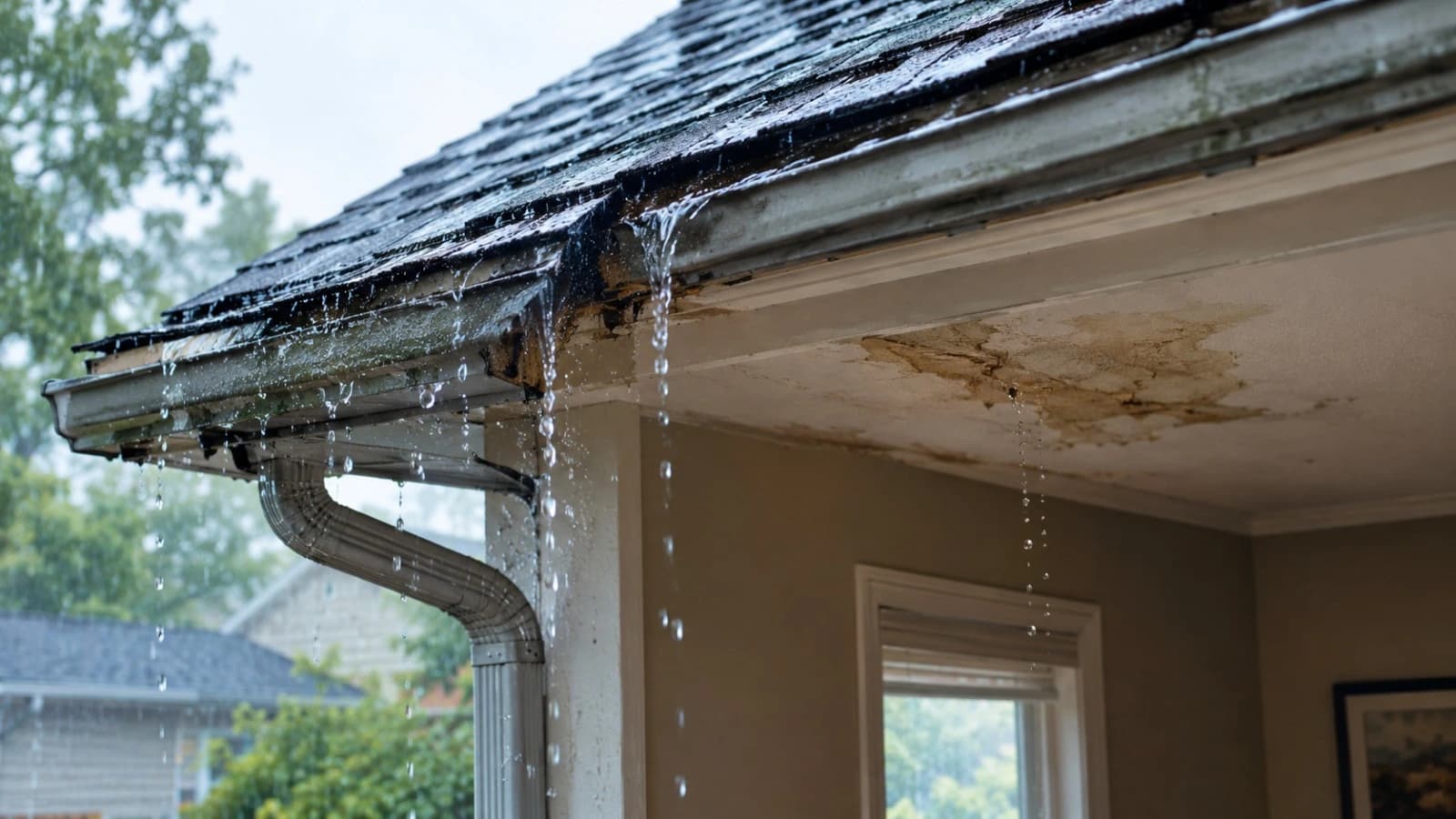
What Causes Roof Leaks in New Jersey Homes?
New Jersey homes face a mix of heavy rain, snow, freezing temperatures, strong winds, and humid summers. These conditions can weaken roofing materials and expose vulnerable areas over time.
1. Damaged or Missing Shingles
Asphalt shingles can crack, curl, loosen, or blow away during strong winds. Once the protective layer is compromised, rainwater can reach the underlayment and roof decking.
How to fix it: Replace damaged or missing shingles and inspect the surrounding area for moisture damage. Widespread deterioration may indicate that a larger roof repair or replacement is necessary.
2. Worn or Damaged Roof Flashing
Flashing seals vulnerable joints around chimneys, skylights, vents, and roof valleys. When flashing corrodes, separates, or develops gaps, water can enter even if the shingles appear intact.
How to fix it: A roofer should inspect the flashing, repair loose connections, and replace damaged sections with properly installed, weather-resistant materials.
3. Clogged Gutters and Downspouts
Leaves, twigs, and debris can prevent water from draining properly. Overflowing gutters may allow water to collect near the roof edge, damage fascia boards, and contribute to leaks.
How to fix it: Clean gutters and downspouts regularly and check that water flows away from the house. Repair sagging sections and ensure the drainage system works correctly.
4. Ice Dams During Winter
Ice dams develop when melting snow refreezes near the colder edges of a roof. Water can back up beneath shingles and enter the attic or upper floors.
How to fix it: Remove snow safely using appropriate equipment and have a professional assess attic insulation, ventilation, and air leaks. Avoid chipping ice with sharp tools, which can damage roofing materials.
5. Storm and Wind Damage
Severe thunderstorms, falling branches, and high winds can damage shingles, loosen flashing, and puncture roofing materials. Some damage is difficult to see from the ground.
How to fix it: Arrange a roof inspection after significant storms. Document visible damage and address exposed areas promptly to prevent additional water intrusion.
How to Identify a Roof Leak
A roof leak does not always appear directly beneath the damaged section. Water can travel along rafters, insulation, and ceiling materials before becoming visible indoors.
Look for these common warning signs:
- Brown or yellow ceiling stains.
- Peeling paint or bubbling drywall.
- Damp insulation or a musty attic smell.
- Visible daylight through roof boards.
- Mold or mildew near ceilings and upper walls.
- Water marks around chimneys, skylights, or vents.
If you notice these symptoms, inspect accessible attic areas only when safe. Do not climb onto a wet, icy, or storm-damaged roof.
How to Fix Common Roofing Problems
The correct repair depends on where water enters and how much damage has occurred.
| Roofing problem | Typical solution |
|---|---|
| Missing or cracked shingles | Replace affected shingles and inspect the underlayment |
| Failed flashing | Repair or replace flashing and reseal appropriate joints |
| Clogged gutters | Remove debris and correct drainage problems |
| Ice dams | Address snow buildup safely and improve attic air sealing |
| Damaged roof decking | Replace deteriorated wood after locating the moisture source |
| Widespread roof deterioration | Evaluate whether extensive repairs or roof replacement are appropriate |
A temporary patch may reduce water entry, but it should not replace a proper diagnosis. Applying sealant to the wrong area can hide symptoms while allowing moisture to spread.
How Much Does Roof Leak Repair Cost in New Jersey?
Roof leak repair costs vary depending on the leak's location, roofing material, labor requirements, and extent of water damage. A simple shingle repair will generally cost less than replacing damaged flashing, repairing roof decking, or addressing extensive moisture damage.
Other cost factors include roof accessibility, steep slopes, emergency service, and the need to remove and reinstall roofing materials.
Before approving work, request a written estimate that explains the suspected cause, recommended repairs, materials, labor, and any exclusions. If storm damage may be covered by homeowners insurance, review your policy and document the damage before repairs whenever safely possible.
Why Professional Roof Leak Repair Matters
Finding the actual entry point is often more difficult than fixing the visible stain. A professional roofer can inspect shingles, flashing, valleys, roof penetrations, and accessible attic spaces to determine where water is entering.
Professional service is particularly valuable when leaks recur, multiple areas are affected, or the roof has suffered storm damage. Experienced contractors can also identify underlying problems that a surface-level patch would miss.
When choosing a roofing company, look for appropriate licensing and insurance, written estimates, clear communication, and references or reviews. Ask about workmanship warranties and whether the proposed repair addresses the source of the leak rather than just its symptoms.
Roof Leak Prevention Tips for New Jersey Homeowners
Routine maintenance can reduce the likelihood of unexpected leaks and extend the service life of your roof.
- Inspect your roof twice a year: Spring and fall are useful times to check for visible damage.
- Clean gutters regularly: Remove leaves and debris, particularly after storms and during autumn.
- Check flashing and roof penetrations: Pay attention to chimneys, vents, skylights, and valleys.
- Trim overhanging branches: Reduce the risk of falling limbs and excessive debris.
- Maintain attic insulation and ventilation: Proper air sealing and ventilation can help reduce winter ice-dam risks.
- Schedule post-storm inspections: Have suspicious damage assessed before minor problems worsen.
- Keep records of inspections and repairs: Keep records of inspections and repairs so you can track recurring problems and plan future maintenance.
Frequently Asked Questions
Professional Roof Leak Repair for New Jersey Homes
At Gutama Roofing, homeowners can explore roofing services tailored to their property's needs, from investigating leaks to assessing damaged roofing materials. Choosing the right solution starts with identifying the source of the water intrusion and understanding the roof's overall condition. A careful inspection can help distinguish between a localized repair and a more extensive roofing concern.
When comparing roofing contractors, ask for a clear explanation of the problem, a detailed estimate, and recommendations suited to your home's roof type and exposure to New Jersey weather. Prioritizing sound workmanship and timely maintenance can help protect your property and reduce the risk of recurring leaks.
If you suspect a roof leak or have noticed water stains after a storm, visit Gutama Roofing's services page to learn more and contact the team to discuss an inspection or request a quote.
Conclusion
Roof leaks in New Jersey homes can develop from damaged shingles, failing flashing, clogged gutters, winter ice dams, and severe weather. The best response is to identify the underlying cause, repair affected materials properly, and address moisture damage before it spreads.
Regular inspections and preventive maintenance can help homeowners avoid larger problems. If you notice signs of a leak, do not wait for the next storm to investigate. Arrange a professional roof assessment to understand your options and protect your home.
Suspect a Roof Leak?
Schedule a professional roof assessment to protect your New Jersey home from water damage.